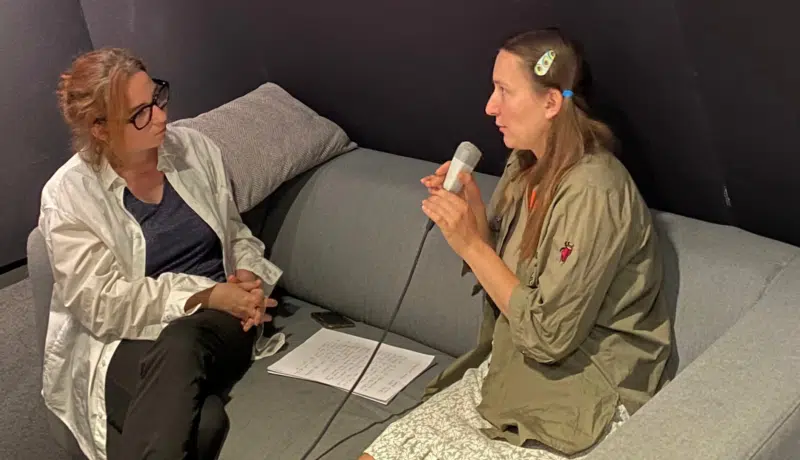
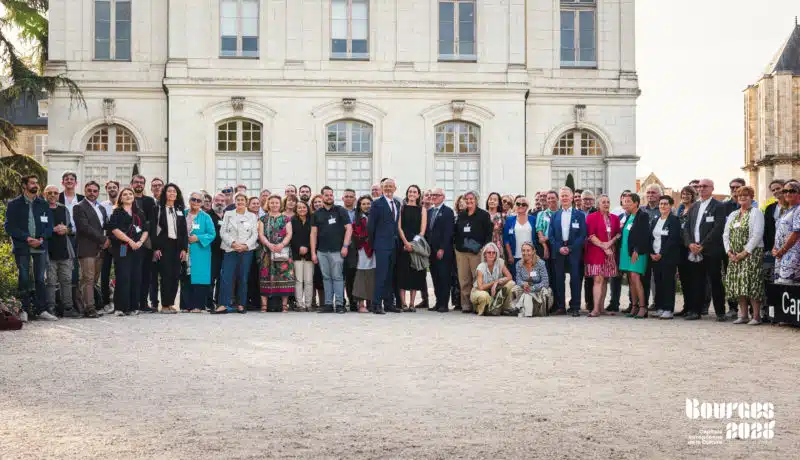
What remains after the title year? This was the central question addressed from 29 September to 1 October in Chemnitz, Germany, during the fourth knowledge transfer seminar of the European project ECoC Echo, attended by Louise Tournillon, Head of International Relations at Bourges 2028.
Launched in 2025 as part of the Interreg Europe programme, ECoC Echo brings together nine European countries around a shared challenge: understanding what happens to territories, partnerships and projects once the European Capital of Culture title year has come to an end.
Following seminars in Tartu (Estonia), Veszprém (Hungary), Leeuwarden (the Netherlands) and Novi Sad (Serbia), the fourth seminar took place in Chemnitz, which held the European Capital of Culture title in 2025.
What remains after the title year?
Almost a year after its year as European Capital of Culture, Chemnitz provides a concrete opportunity to observe what endures, what evolves and what remains to be built.
Among the projects visited during the seminar, Purple Path continues to connect the city with its wider region through an artistic trail spread across the territory. Maker Region explores new ways of working together and developing cooperation between local stakeholders and territories.
The seminar also provided an opportunity to discover several projects illustrating Chemnitz’s ambition to build a lasting legacy beyond 2025. At the Sächsisches Fahrzeugmuseum, 3000 Garages explores the city’s industrial and automotive history. At KohleWelt, an exhibition dedicated to artist James Turrell offers another example of how the momentum generated by the title year can be carried forward.
Beyond the projects themselves, these visits offered an opportunity to explore the different forms that the legacy of a European Capital of Culture can take.
From knowledge sharing to action
Over three days, conferences, site visits and discussions gave participants the opportunity to share experiences and reflect on common challenges.
How can partnerships be maintained once the title year is over? How can citizen participation continue? How can culture become embedded in the long-term development of a territory? And how can the transformations generated by a European Capital of Culture be measured over time?
These discussions were structured around a common thread: Awareness, Action, Acceptance — becoming aware, taking action, and then ensuring that the transformations initiated are understood, embraced and shared.
These questions directly echo the reflections taking place in Bourges as the city prepares for 2028. Preparing for a European Capital of Culture also means thinking from the outset about what will remain after the title year: projects, partnerships, skills and new ways of working together.
Learning from those who have been there
Just a few days after the Matrice Seminar, held in Bourges on 24 and 25 September, this European gathering provided another opportunity to continue discussions around the legacy of European Capitals of Culture.
For Bourges 2028, these knowledge-sharing moments offer a chance to look closely at what happens after the title year, learn from previous experiences and start shaping the reflection on what comes after 2028.
Photo credit: Natalie Bleyl
 S'inscrire à la newsletter
 Download Bidbook