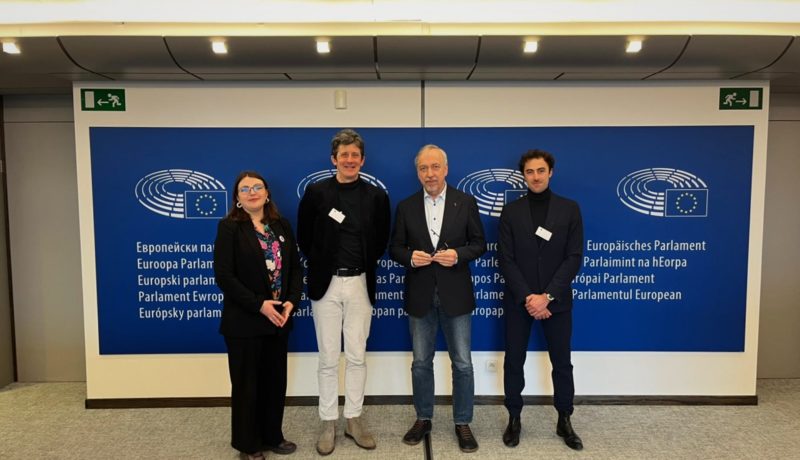
Nine European countries have launched a joint initiative aimed at strengthening the long-term impact of the European Capitals of Culture (ECoC) beyond their title year.
The project, entitled ECoC Echo, focuses on solutions designed to sustain and amplify the momentum generated during the title year, supporting the growth of the cultural sector, territorial development and international cooperation.
The project brings together former, current and future European Capitals of Culture: Leeuwarden 2018 (Netherlands), Novi Sad 2022 (Serbia), Veszprém 2023 (Hungary), Tartu 2024 (Estonia), Chemnitz 2025 (Germany), Oulu 2026 (Finland), Liepāja 2027 (Latvia), Évora 2027 (Portugal), and Bourges 2028 (France).
In addition to the ECoC cities, the project includes local and regional partners who play a key role in shaping and implementing cultural policies.
« The preparation and implementation of a European Capital of Culture have provided a major boost to the cultural life and economy of many regions.
Today, it is equally essential to channel this momentum towards long-term sustainable development. ,” explains Sille Talvet-Unt, representative of Tartu 2024 and project lead of ECoC Echo.
“ECoC Echo is a unique opportunity to learn from past and future European Capitals of Culture and to bring new knowledge to our cities, particularly in the areas of cultural management and international cooperation,” adds Sille Talvet-Unt.
The project’s total budget amounts to approximately €2.27 million, shared among the nine participating countries and their twelve partner organisations.
As part of the initiative, the development strategies of the European Capitals of Culture will be updated to ensure the implementation of the agreed long-term objectives.
The final results will be presented at the end of 2028 in Bourges, France, on the occasion of the launch of the next European Capital of Culture year.
The project is co-funded by the European Union’s Interreg Europe programme, which supports interregional cooperation and helps public authorities improve their policies across Europe.
 S'inscrire à la newsletter
 Download Bidbook